Off-Plan Investment Risks in 2026: Oversupply, Delays and Market Sentiment
Mar 16, 2026
If you have been eyeing an off-plan property investment in 2026, you are not alone. From Dubai to Manchester, Bangkok to Istanbul, off-plan developments continue to attract buyers with glossy renders, below-market launch prices, and flexible payment structures that spread costs over the construction period. The pitch is familiar and often compelling: get in early, pay in stages, and collect your capital gain at handover.
But 2026 is not the same market it was three or four years ago. The risks that were always present in off-plan investing are now more visible, more frequently realized, and harder to paper over with rising prices. More off-plan investments are stalling than ever, and more investors are reporting problems with off-plan properties failing to deliver as promised. That does not mean every off-plan deal is bad. It does mean that if you are investing this year, you need to go in with your eyes fully open.
This guide breaks down the three biggest risk categories surrounding off-plan investment in 2026, namely oversupply, construction delays, and shifting market sentiment, and tells you what to watch for before you sign anything.
What Is Off-Plan Property and Why Does It Still Appeal?
Off-plan property refers to a property that is purchased before construction has been completed or sometimes even before it has begun. Pre-construction purchases are typically marketed to real estate developers and early buyers so that purchasers can secure favorable terms, and investors buy in with the aim of making capital gains, either through discounts offered at launch or through price appreciation during the development cycle, which typically runs 12 to 24 months.
In simple terms, off-plan investment means buying before the property is built or while it is still under construction, usually at a lower price, with the expectation that value will grow by completion. Buyers pay in stages, starting with a small booking deposit, then progress payments tied to construction milestones, and a final balance at handover.
In markets like Dubai, this model has become dominant. Off-plan property sales accounted for over 70 percent of total residential transactions in Dubai in the first half of 2025, driven by aggressive developer launches, flexible payment plans, and strong international investor demand. The appeal is real. But so are the risks, and in 2026, those risks have compound layers that savvy investors cannot afford to ignore.
Risk Number One: Oversupply and Its Quiet Impact on Returns
Oversupply is arguably the most underestimated risk in off-plan investing because it does not always make headlines. It creeps in gradually, driven by developers all rushing to capitalize on the same hot market signals at roughly the same time. By the time the glut becomes obvious, you may already be locked into a purchase contract.
In markets like Dubai, the rapid development pipeline means some areas may face temporary oversupply, particularly in mid-range apartment clusters, which can weaken rental yields and extend vacancy periods. What makes this particularly dangerous for off-plan buyers is the timing gap. You buy based on market conditions today, but you take possession in 12, 24, or even 36 months. A lot can change in that window.
Looking at broader property markets, deliveries remained elevated in 2025, with hundreds of thousands of new residential units completing across major markets. However, heavy development pipelines in high-growth areas saw pronounced absorption challenges as economic uncertainty rose and job creation slowed in several key cities.
The oversupply problem is not limited to any one geography. Markets like Bangkok and Pattaya have historically experienced supply surges that temporarily weaken rental returns, while countries with tourism-dependent real estate see short-term rental returns fluctuate significantly with seasonal and global travel trends.
For investors buying off-plan in 2026, the key question to ask is not just whether the project is well-located today, but whether there are five, ten, or twenty similar projects launching within the same catchment area in the same timeframe. If the answer is yes, you need to think carefully about what your rental yield and resale value will look like in a saturated market at the point of completion.
Risk Number Two: Construction Delays and Developer Credibility
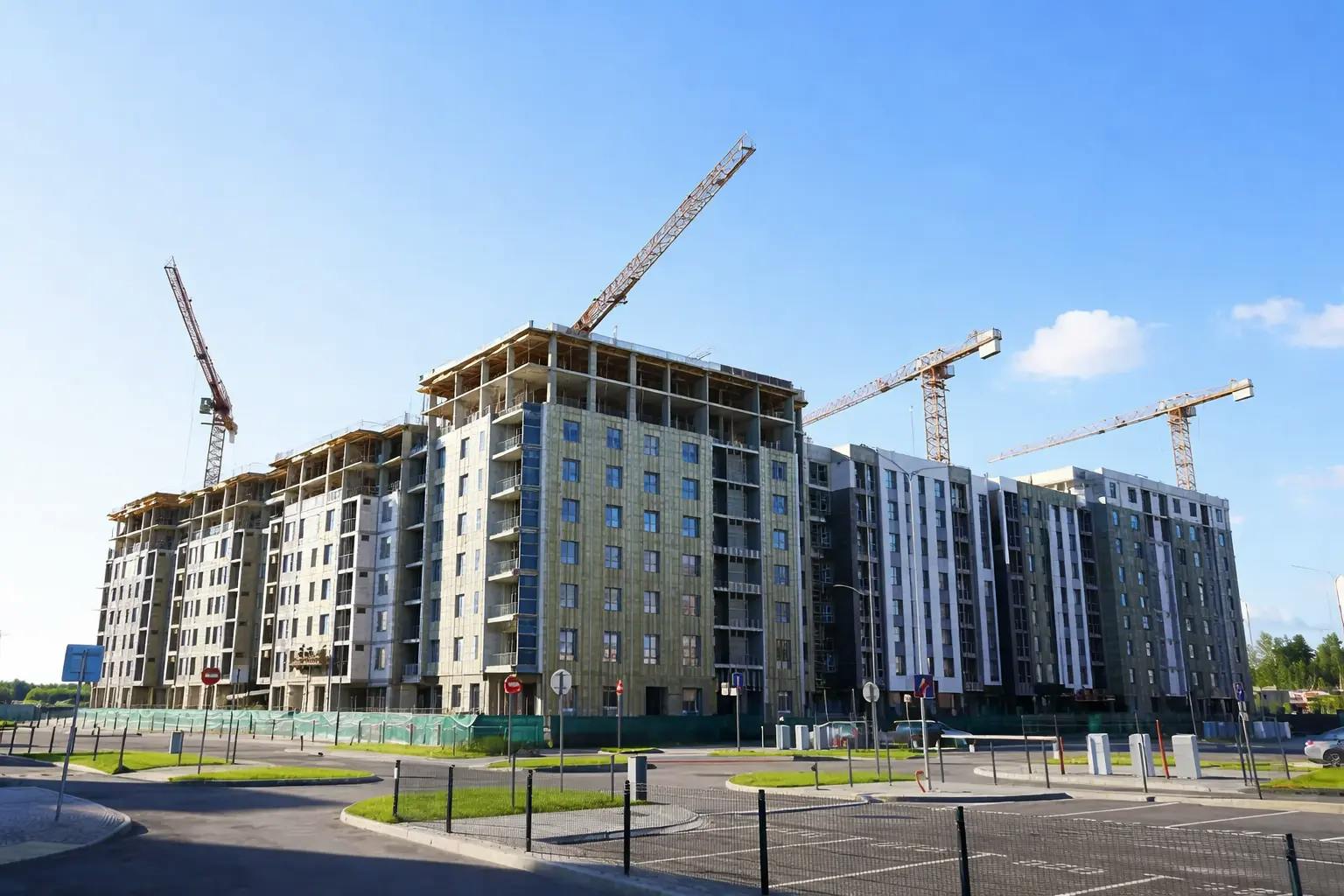
Construction delays are the most common complaint from off-plan investors worldwide, and in 2026 the conditions that cause them are more pronounced than they have been in years.
Projects can be delayed due to weather, supply chain issues, labor shortages, or funding problems, and delays of three to twelve months are not uncommon. If a developer goes bankrupt mid-construction, buyers may lose their deposits or face lengthy legal battles.
Build timelines can slip due to labour shortages, materials costs, funding issues, planning complications, or contractor problems. A delay does not just affect patience, it can affect finance arrangements, cash flow plans, and exit strategy. If you planned to refinance a mortgage on a property that was supposed to complete in Q1 but now will not deliver until Q4, you may find your rate lock has expired, your lender has reassessed, or your personal financial circumstances have shifted.
Globally, delays, defaults, and insolvencies are common in construction due to overrunning projects, and payment delays are expected to persist in many markets, influenced by bureaucratic challenges and financial constraints. Markets in Southeast Asia, particularly Thailand and Vietnam, are experiencing increases in payment delays and insolvencies often caused by project delays and volatile materials prices, leading to liquidity shortages.
The broader credit tightening environment also affects developer financing. When borrowing becomes more expensive and lenders become more selective, smaller or over-leveraged developers become vulnerable, and the risk of a project stalling mid-build rises considerably. This is a dynamic that is very much alive in 2026.
The lesson here is straightforward. Developer credibility is not a soft consideration. It is one of the hardest financial factors in an off-plan deal. Before you invest, investigate the developer's track record, look at how many of their previous projects were delivered on time and to specification, examine whether deposits are held in protected escrow accounts, and read the delay penalty clauses in the contract carefully.
Risk Number Three: Market Sentiment and the Valuation Gap
The third major risk is arguably the most psychologically difficult to plan for, because it hinges on something as fluid as investor sentiment. Off-plan properties are priced against expected future values. If sentiment shifts between the date of purchase and the date of completion, the property you paid for may not be worth what you expected.
Market fluctuations can impact property value significantly. Prices might rise or dip before completion, which is actually quite common in property markets globally. But the concern in 2026 is more structural than cyclical. Several interconnected forces are affecting how investors feel about risk right now.
Consumer sentiment surveys in 2026 reflect caution even as hard spending data remains relatively stable. The concern is that if the labor market continues to soften, inflation stays sticky, and affordability does not improve, demand for discretionary assets including investment properties may weaken. When consumers and investors feel cautious, the premium pricing that off-plan launches depend on becomes harder to sustain.
Interest rates remain a central part of this story. While cuts are expected in major economies through 2026, the timeline and scale remain uncertain. Earlier rate reductions in several markets did not substantially bring down long-term mortgage rates or meaningfully revive housing demand, which means that financing conditions for off-plan buyers completing purchases this year may be less favorable than originally anticipated.
There is also the question of how geopolitical uncertainty feeds into property investor sentiment globally. Trade tensions, tariff pressures, currency volatility in emerging markets, and ongoing conflicts in various regions all chip away at the confidence that drives premium pricing in property markets. When investors feel uncertain, they gravitate toward liquidity and income certainty, neither of which off-plan properties provide in abundance.
How to Invest Wisely in Off-Plan Property in 2026
None of this means off-plan investment is a bad idea across the board in 2026. It means it requires more rigorous due diligence than it did in a simpler market environment.
The first principle is developer selection. Choosing established developers with proven track records and reviewing sales contracts for delay penalty clauses are among the most important protections available to off-plan buyers. In regulated markets, verify that your funds are held in an escrow account that is protected in the event of developer insolvency.
The second principle is supply-side research. Before committing, map out every comparable project within the relevant catchment area that is due to complete in the same window as your target property. If multiple developments will flood the market simultaneously, your pricing assumptions may not hold.
The third principle is scenario planning. Off-plan is better suited to long-term growth strategies, while ready properties work better for immediate use or income. It is most suitable for long-term investors and anyone comfortable planning ahead. If you need flexibility, liquidity, or near-term rental income, an off-plan property in the current market environment may not align with those needs.
The fourth principle is legal protection. In strong regulatory markets, meaningful protections exist. In Dubai for example, escrow accounts are required under law and ring-fence buyer funds until milestones are met, providing protection against developer insolvency. Buyers also retain rights to compensation if handover exceeds contractual dates beyond a defined period. Always verify what protections exist in your specific market and jurisdiction, because they vary enormously.
The Bottom Line
Off-plan investment in 2026 rewards the well-prepared and punishes the complacent. The fundamental appeal of buying early at a discount with staged payments is intact. But the environment surrounding that opportunity, characterized by real oversupply pressure in certain markets, elevated developer risk driven by construction cost inflation and financing constraints, and a more cautious investor sentiment globally, demands that every buyer does the work before signing.
The investors who succeed this year will not be those who were dazzled by a showroom apartment or convinced by an optimistic brochure. They will be the ones who asked hard questions about the developer, studied the local supply pipeline, understood what happens if there is a delay, and built their financial plans around realistic rather than best-case scenarios.
Off-plan can still be a powerful wealth-building tool. In 2026, it just requires more than ever that you treat it like the complex financial instrument it actually is.