
Best Places to Visit in Sharjah - Culture, Coastline, and Hidden Gems
Sharjah carries a distinction that its neighbors can't claim. While Dubai dazzles with spectacle and Abu Dhabi commands with scale, Sharjah operates on a different frequency entirely. Named UNESCO's …
Sharjah carries a distinction that its neighbors can't claim. While Dubai dazzles with spectacle and Abu Dhabi commands with scale, Sharjah operates on a different frequency entirely. Named UNESCO's Cultural Capital of the Arab World, it has built an identity rooted in museums, heritage districts, waterfront parks, and a genuine commitment to preserving what makes Emirati culture worth understanding. Whether you're crossing over from Dubai for a day or planning a standalone trip, the emirate has far more depth than most visitors realize. This guide covers the best places to visit in Sharjah, from its iconic lagoon-side attractions to quieter corners that reward those who explore beyond the obvious.
Al Majaz Waterfront
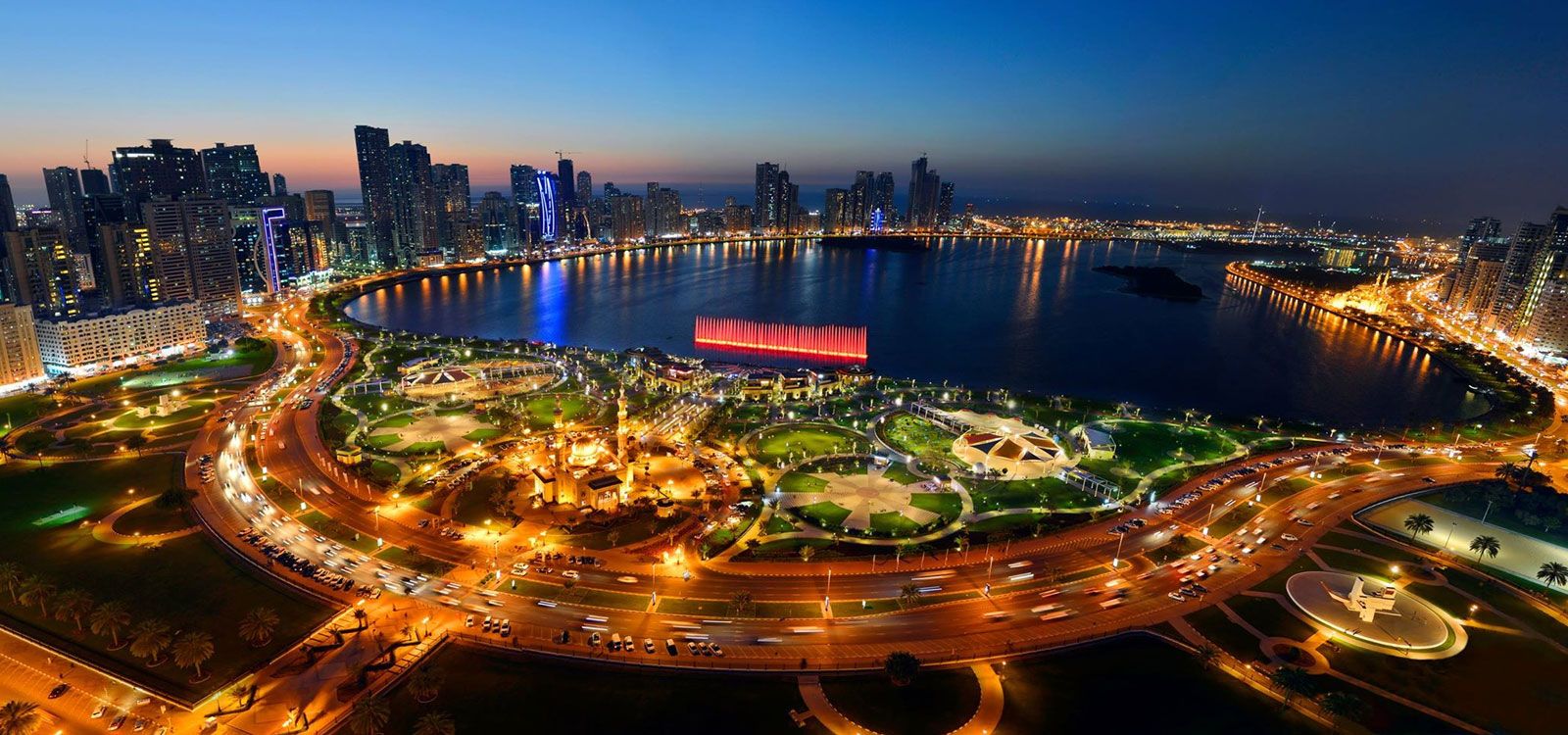
There is a strong argument that Al Majaz Waterfront is the most enjoyable stretch of public space in the entire UAE, and it doesn't cost a single dirham to spend an evening here. Situated along Khalid Lagoon, the waterfront extends through well-maintained promenades, jogging paths, and open green areas that fill with families and couples every evening from dusk onward. The centerpiece is the Sharjah Musical Fountain, which puts on a spectacular free show of water jets choreographed to music and color-changing lights. The fountain performances run in the evenings on a regular schedule, and watching them from the surrounding boardwalk while the illuminated towers of the city reflect across the lagoon is one of those experiences that makes a strong case for Sharjah on its own terms. Boat rentals and a dedicated children's play area make it ideal for families staying for the full evening.
Al Noor Island
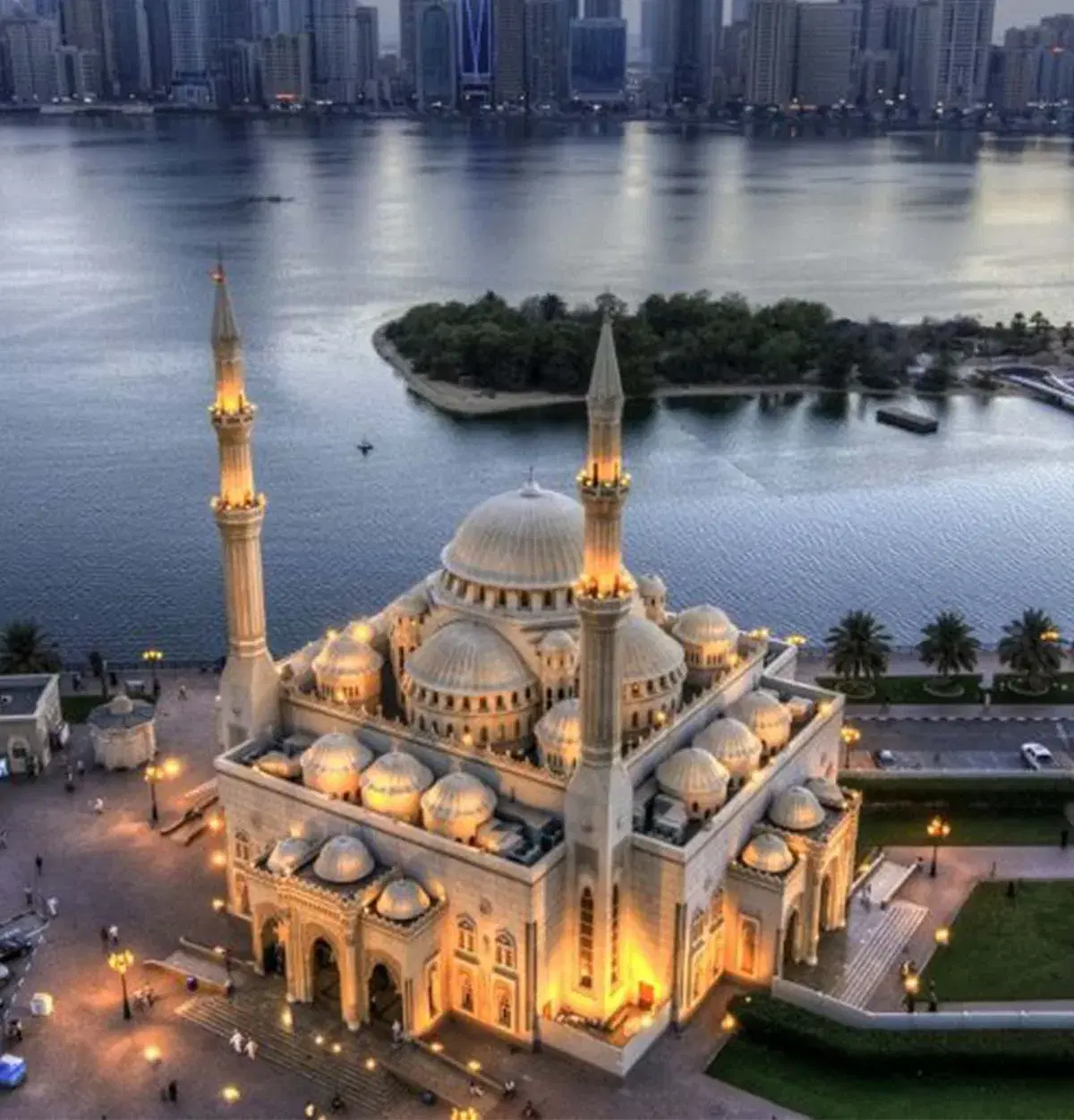
Sitting in the middle of Khalid Lagoon, Al Noor Island connects to the mainland via a short bridge and represents Sharjah at its most quietly beautiful. The island is designed as a botanical garden and nature sanctuary, with winding nature trails, sculpted flowerbeds, and a butterfly house that children particularly love. The public spaces along the perimeter offer views across the lagoon in both directions, and the surrounding landscape has a serenity to it that feels removed from the city even though you're a few minutes from the center. The outdoor areas are free to explore, and the island becomes especially atmospheric in the late afternoon when the light softens and the evening breeze picks up off the water.
The Sharjah Heritage Area
Walking through the Sharjah Heritage Area is the best way to understand what this emirate has worked hard to protect. The district has been carefully restored to reflect traditional Emirati architecture, with wind towers rising above narrow lanes, arched doorways leading into courtyard homes, and adobe walls that carry genuine age rather than decorative imitation. Several of the buildings have been converted into museums, most of which are free or carry minimal entry charges. The Sharjah Museum of Islamic Civilization is the standout cultural institution in the district, housing an extensive collection of manuscripts, astronomical instruments, Quran displays, and decorative arts spanning centuries of Islamic history. Bait Al Naboodah offers a different kind of insight, reconstructing the life of a prosperous early 20th-century merchant family complete with original furniture, cooking implements, and personal objects. The Heritage Area is best explored in the morning before the midday heat sets in, or in the early evening when the lanes cool down and the neighborhood takes on a softer quality.
Sharjah's commitment to heritage preservation is directly tied to its broader architectural philosophy, which draws deeply on Islamic design principles and traditional Emirati building techniques. For anyone curious about how the UAE's built environment evolved from those roots into the skylines it has today, our guide on UAE architecture and design explores that journey in detail.
Al Qasba
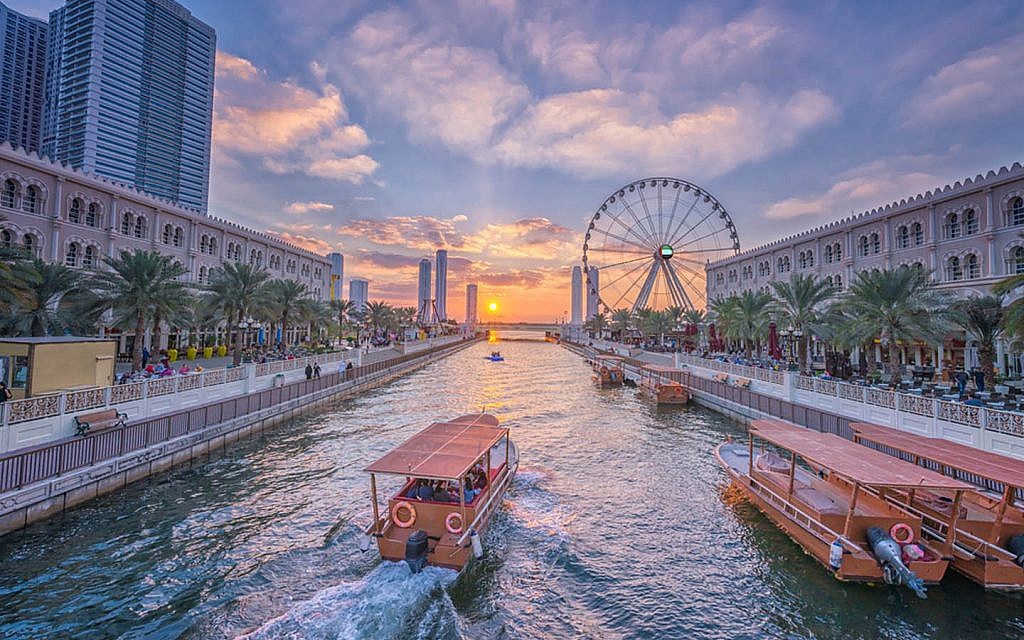
Al Qasba is one of Sharjah's most animated destinations, a canal-side entertainment and dining district that balances cultural programming with an easygoing public atmosphere. The canal walk is free to stroll at any hour, with restaurants and cafes spilling out onto waterside terraces and small performance spaces hosting regular live events. The Eye of the Emirates Ferris wheel rises at one end of the canal and offers sweeping views of the city for those who want a higher vantage point, though admission applies. Traditional dhow cruises depart from the canal for those who prefer to experience the waterway from the water itself. Al Qasba is particularly vibrant during the Sharjah Light Festival and the Sharjah International Book Fair season, when additional programming and installations transform the space throughout the evening.
Souq Al Jubail
Souq Al Jubail earns its place among the most interesting markets in the UAE without trying to compete with Dubai's souk tourism industry. It is large, covered, and genuinely functional, meaning it serves the local community as much as it does visitors. The sections move between fresh produce, seafood brought directly from the UAE's east and west coasts, spices sold by weight from open sacks, fabrics, clothing, and traditional household items. Wandering through without any shopping agenda is entirely reasonable. The sights, sounds, and layered aromas are engaging enough on their own, and the vendors are generally relaxed about browsers. Bargaining is both expected and accepted in the non-food sections, and the exchange is usually good-natured. Early morning visits, particularly on weekends, offer the most activity in the seafood and produce sections.
Al Qasimiah Beach and Al Heera Beach
Sharjah's public beaches are among the most family-friendly in the UAE. Al Heera Beach stretches for 3.5 kilometers along the Arabian Gulf and is one of the longest continuous public beaches in the country, with well-maintained facilities including changing rooms, showers, and designated swimming zones. Al Qasimiah Beach offers a more sheltered stretch of coastline with quieter crowds. Both beaches are free, clean, and easily accessible by car. The water along Sharjah's Gulf coast is warm and calm for most of the year, making these beaches practical options not just for the winter months but for anyone visiting in the shoulder seasons of October and April as well.
Sharjah Art Museum
For a city that takes its cultural identity seriously, the Sharjah Art Museum represents a genuine commitment rather than a box-checking exercise. The collection focuses primarily on Arab and Islamic art, with works spanning painting, calligraphy, and sculpture from across the region and across several centuries. Temporary exhibitions cycle regularly and tend to feature significant contemporary Arab artists alongside historical collections. Entry to the museum is free, which says something meaningful about Sharjah's approach to public cultural access. The building itself, located in the Arts Square area near the Heritage Area, is well designed with spacious galleries and good natural light in the permanent collection rooms.
Sharjah Classic Cars Museum
The Sharjah Classic Cars Museum occupies a distinct niche among the emirate's attractions, drawing in visitors who might not typically seek out a museum but find themselves unexpectedly absorbed by the collection. Vintage and classic vehicles from the early twentieth century onward are displayed across the museum, and each is accompanied by contextual information about its era, manufacturer, and history. The quality of the restoration work is high, and the breadth of what's on display, from early American automobiles to European sports cars and ceremonial vehicles, makes a longer visit than expected entirely easy to justify.
Sharjah Corniche
The Sharjah Corniche runs along the Khalid Lagoon on the city side, connecting Al Majaz to the Heritage Area along a continuous waterfront promenade. In the evenings it becomes one of the most reliably pleasant walks in any emirate, with the lagoon on one side, cafes and shaded seating along the other, and enough ambient activity to make a one-hour stroll feel varied throughout. The Corniche is particularly well-suited for night visits between October and April when the temperature drops to a genuinely comfortable level and the city lights reflect across the water in a way that no photograph fully captures.
Al Hamriyah Beach
Further north along Sharjah's coastline, Al Hamriyah Beach offers a more relaxed, less-visited alternative to the central city beaches. It has been developed with accessibility features that make it welcoming for visitors with disabilities, including pathways to the water's edge and accessible facilities. The surrounding area is quieter than the city's central beachfronts, and the beach itself is well maintained. For those looking for a half-day that combines the beach with some of the nearby fishing community atmosphere of Hamriyah town, it makes a worthwhile standalone trip or a complementary stop on a longer coastal drive.
The Sharjah Light Festival
While not a permanent attraction, the Sharjah Light Festival deserves mention for anyone planning a visit between February and March each year. The annual festival transforms the facades of the Heritage Area, Al Majaz Waterfront, Al Qasba, and several of the city's major landmarks into illuminated canvases for projection mapping and light art installations. Entry to most of the festival's outdoor areas is free, and the scale of the production is genuinely impressive. It runs for about two weeks each year and draws visitors from across the region specifically for the evening displays.
Visiting Sharjah as Part of a Wider UAE Trip
Sharjah's proximity to Dubai, with the two cities sharing a continuous urban boundary, makes it an unusually easy addition to any UAE itinerary. Most of the attractions in this guide are clustered tightly enough around Khalid Lagoon and the Heritage Area to be covered in a full day on foot or with minimal driving. For those building a more extended itinerary that takes in outdoor and nature-based experiences across the UAE, our guide on camping spots in the UAE covers several options in the northern emirates that pair naturally with a Sharjah cultural day.
Frequently Asked Questions
What are the best places to visit in Sharjah for families?
Al Majaz Waterfront, Al Noor Island, Al Heera Beach, Al Qasba, and Souq Al Jubail are all strong choices for families. The waterfront areas in particular offer a mix of open space, children's play areas, dining options, and free entertainment that keeps all ages engaged across a full evening.
Are there free places to visit in Sharjah?
Yes, the majority of Sharjah's most rewarding attractions are free or carry very low admission charges. Al Majaz Waterfront, the Sharjah Corniche, Al Heera Beach, Souq Al Jubail, the Heritage Area streets, and the Sharjah Art Museum are all free to visit. The Musical Fountain show at Al Majaz is also free.
What is the best time to visit Sharjah?
October through April offers the most comfortable weather for exploring Sharjah's outdoor attractions. Evening visits are ideal year-round as temperatures drop significantly after sunset, and many of the waterfront areas come to life in a way they don't during daylight hours.
How far is Sharjah from Dubai?
Sharjah borders Dubai to the northeast and the two cities are connected by a continuous urban corridor. The drive from central Dubai to Sharjah's Heritage Area or Al Majaz Waterfront typically takes 20 to 40 minutes depending on traffic, which can be heavy on the Sheikh Mohammed Bin Zayed Road during peak hours.
What is Sharjah known for?
Sharjah is known as the Cultural Capital of the Arab World, a designation it holds from UNESCO. It is recognized for its investment in museums, heritage preservation, arts programming, and its status as the UAE's most family-friendly emirate. Alcohol is not sold in Sharjah, and the public atmosphere reflects the emirate's conservative cultural values more closely than Dubai or Abu Dhabi.
Is Sharjah good for a day trip from Dubai?
Sharjah is well suited to a day trip from Dubai. The Heritage Area, Al Majaz Waterfront, Al Qasba, and Souq Al Jubail are all within a compact enough area to be covered in a single day, and the emirate's afternoon-to-evening rhythm makes it particularly rewarding for visits that start around 3 PM and extend into the night.
What are the best things to do in Sharjah at night?
Al Majaz Waterfront with the Musical Fountain show, the Sharjah Corniche walk, Al Qasba's canal-side dining and entertainment district, and the Heritage Area's illuminated streets are all excellent evening destinations. The entire waterfront circuit from Al Majaz to Al Qasba can be walked in about 40 minutes and makes for one of the most enjoyable free evenings in the UAE.
Does Sharjah have good beaches?
Yes. Sharjah has several well-maintained public beaches along its Arabian Gulf coastline, including Al Heera Beach, which at 3.5 kilometers is one of the longest public beaches in the country. Al Hamriyah Beach to the north is another strong option with accessible facilities. Entry to all public beaches is free.